The Latest Drone – DJI Does It Again

The Latest Drone – DJI Does It Again

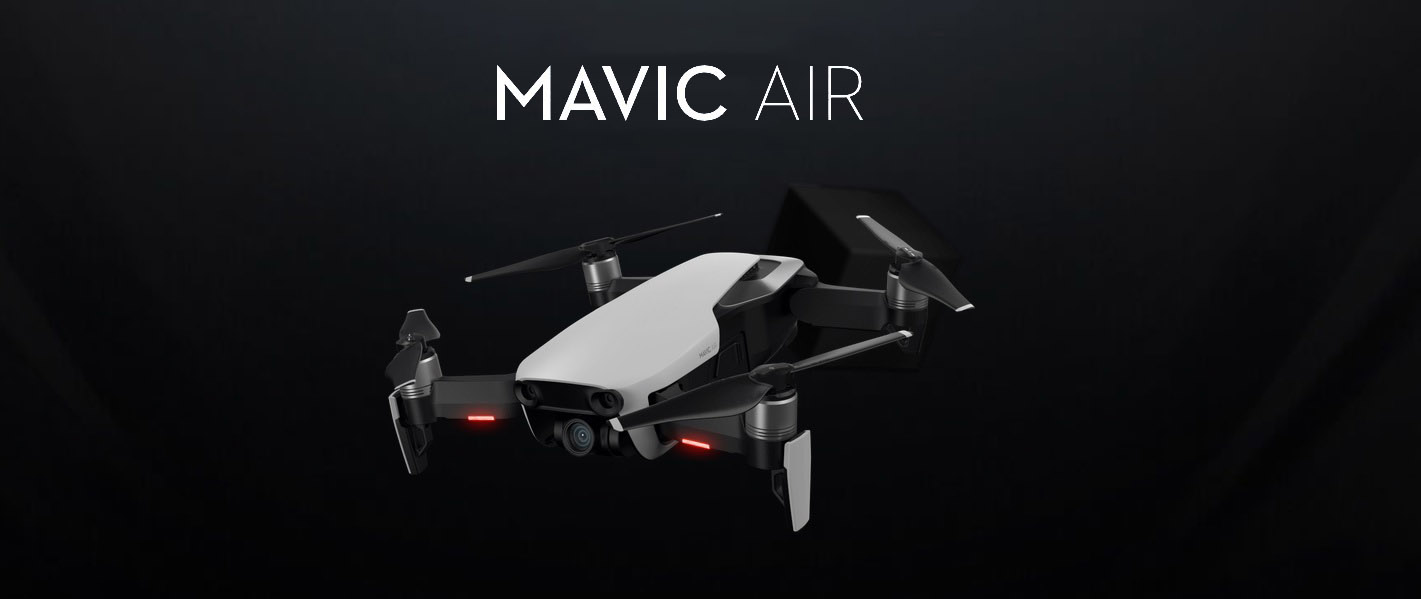
DJI Mavic Air
DJI photo

January 23, 2018 – DJI officially announced the new Mavic Air, which again raises the bar for ease of use and safety for aerial drones. Having watched the announcement live this morning, here are the essential details I have noted (somewhat filtered according to what I find most interesting). So, for those interested in aerial drones or aerial photo/video with drones, here is what you need to know in 60 seconds.

Physical

  • Half the size of Mavic Pro and 41% lighter
  • Antennas concealed within the landing legs (away from the body)
  • 8GB internal storage + SD card slot
  • USB type C port
  • Controller is pocketable, removable control sticks
  • Available in black, white, or red

Camera

  • 1/2.3″ image sensor (same size as Mavic Pro and Phantom 3 Pro)
  • 4K video
  • 12MP still photos
  • HDR capture mode
  • 360-degree panorama, auto stitching up to 25 images
  • New 3-axis gimbal, improved vibration dampening, better image stabilization

Flight control

  • Intelligent flight modes, including improved auto-tracking moving subject and two new quick-shot modes
  • Controllable with hand gestures (up to 19 feet)
  • Advanced pilot assist can automatically go around obstacles
  • More stable, can withstand wind speeds up to 22 mph
  • Fly Safe geo system – information about airspace restrictions

Pricing

  • $799 complete
  • $999 with accessories (extra battery, extra propellers, carrying case, etc)

Availability

  • Shipping Jan.29, 2018.

(I am guessing that demand will be high for this product and it will take some time for DJI to fulfill all the orders.)
Pansonic Lumix G3, G5, G7, G85 and G9

Pansonic Lumix G3, G5, G7, G85 and G9

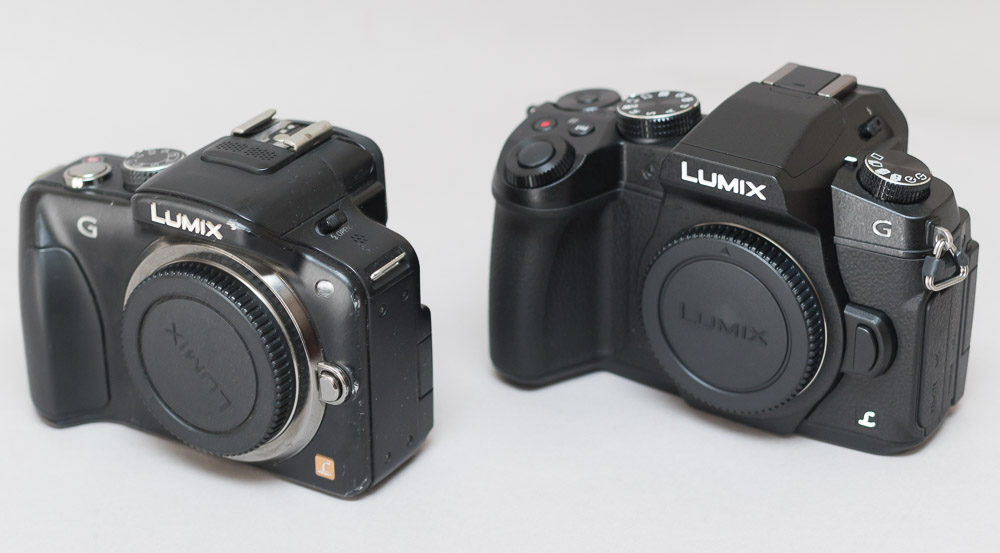
(Left) Panasonic Lumix G3, and (right) Panasonic Lumix G85

Panasonic has long maintained two similar MFT camera lines, DMC-G series and DMC-GH series.  In general, the G series has been intended as mid-level cameras while the GH series has been a bit more high-end, but the differences have not always been obvious.  All of the G and GH series cameras are system cameras with interchangeable lenses and hot shoe for external flash.

While I do own and use DSLR cameras, I have used Panasonic Lumix cameras as smaller alternatives.  My typical day kit (less gear than a multi-day kit) includes a camera body, two lenses, and minor accessories.  My Lumix G series kit is half the size of my DSLR kit.

While camera features improve with each generation, the MFT image sensors in the Lumix cameras seems to not change very much.  The resolution has remained 16 MP up until the new G9, which introduces 20MP in the same FT/MFT format.  In low-light, the RAW image noise is less than excellent but isn’t bad.  Comparing the G3 to the G85, I see a small improvement in the newer camera, but it is small.  It effectively gives me one more stop; the G85 noise at ISO 3200 is comparable to the G3 at 1600.

Features

After considerable study, here are the notable feature changes (notable in my opinion) starting with the G3 and moving to the very latest G9 (which I believe will ship later this month).

The G5 camera layout and handling is essentially the same as the G3

  • 9 fps vs 6 fps
  • “Live MOS” image sensor has technical speed improvements, but same resolution.
  • Video recording supports MP4
  • Higher resolution in both the LCD display and the EVF
  • Eye-sensor below the EVF
  • Larger handgrip

The G7 layout and handling is significantly updated (compared to the G5)

  • 4K video recording
  • OLED touch screen
  • 4K photo mode
  • Wi-fi

The G85 camera layout and handling is essentially the same as the G7.  Here are the important feature enhancements in the G85.

  • In-body image stabilization  (sensor-shift type)
  • 9 fps vs 6 fps
  • 49 focus pts vs 27
  • Higher resolution in both the LCD display and the viewfinder display

The G9 camera layout and handling is new and includes an monochrome LCD info screen on top of the camera.  This is a breakout camera that exceeds the G series moniker.

  • 20mp MFT sensor
  • 20 fps
  • 225 autofocus points
  • Much larger viewfinder (EFV)
  • UHD/4K video up to 60 fps
  • 6K photo mode
  • 80MP image achieved by shifting the sensor 1/2 pixel and then combining the two images together.
  • Optional battery grip (for better handling in vertical orientation)
  • USB 3.0
  • Both Wi-fi and Bluetooth
  • More than 5 ounces heavier than the G85; a bit smaller and lighter than GH5
  • Lacks any built-in flash