Editing Photographs with Topaz Labs AI tools

Editing Photographs with Topaz Labs AI tools

Three recent examples to share, each created using AI tools from Topaz Labs. Though I have long relied upon photo tools from Topaz, the AI features are quite new, added within the past several months.

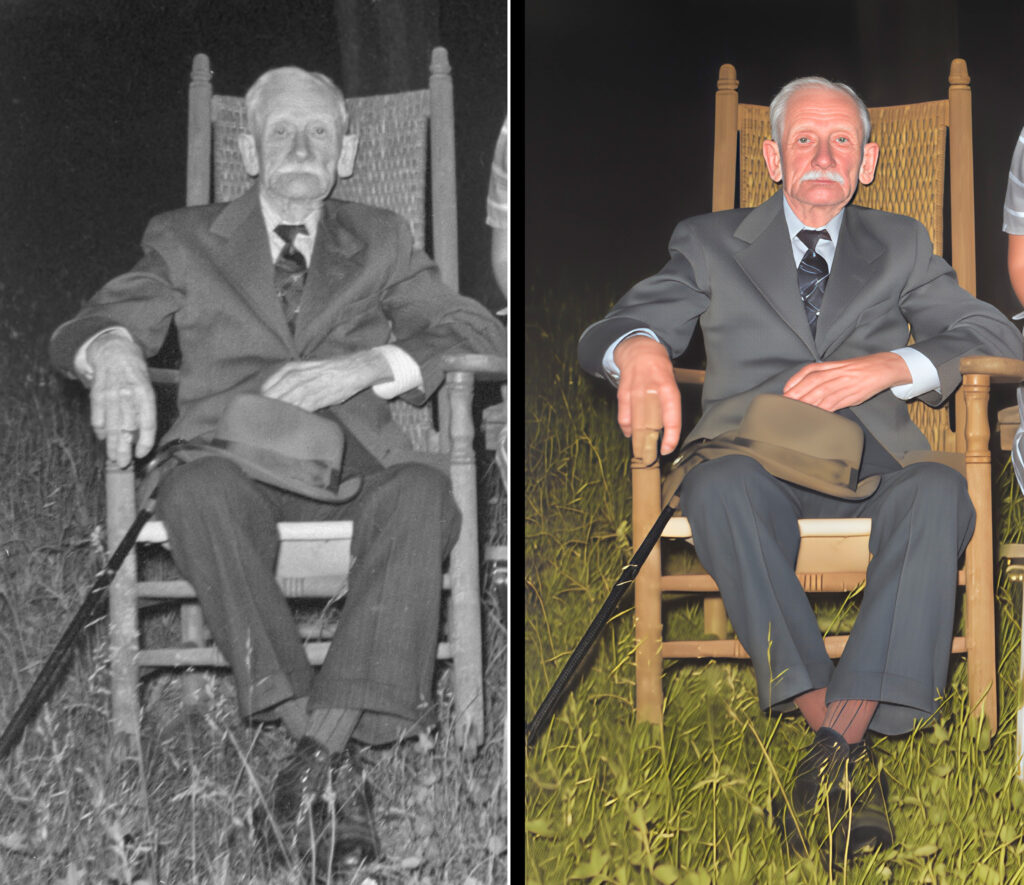
The first image here shows restore and recolor an old black & white photo. This was done using a Topaz online tool called Mosaic. Each use of the online tools requires some AI credits. Use these enough and your credits will be exhausted, requiring purchasing more credits.

In general, the result is quite impressive but there is a flaw. Look at the middle finger of the man’s right hand – the color is the same as the chair.
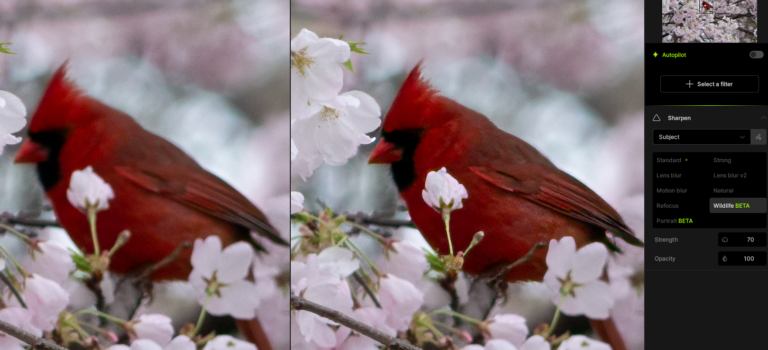
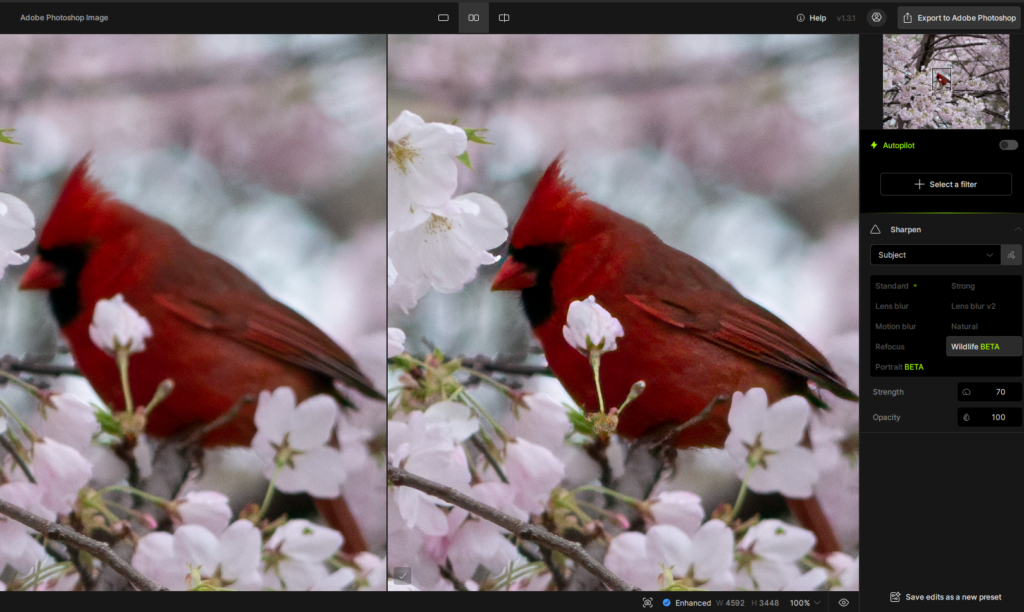
The second and third images here show two separate attempts to fix a photo of a cardinal in a cherry tree. I shot this in New York’s Central Park last spring but my camera wasn’t the best and I was too far away.

The first attempt employed Topaz Photo AI (desktop app) and a new AI model for wildlife, which is still in beta test.
The second attempt uses Topaz Gigapixel AI (desktop app) and a new AI model called Redefine Realistic, which is still in Beta test. This model can optionally use a prompt and you can see the prompt I used (“improve details in the red bird”). Not only does the result show detail in the feathers, but now the bird has an eye. However, the bird’s beak isn’t quite right and now has a nostril.

The changes to the bird are a bit heavy-handed and Gigapixel AI did not limit its changes to only the bird; some undesirable artifacts were introduced to the flowers and in the soft out-of-focus background. This implies a bit more work in Photoshop to blend the revised bird image onto the unmodified background image. I might choose to blend some of the different results from Photo AI and Gigapixel AI.
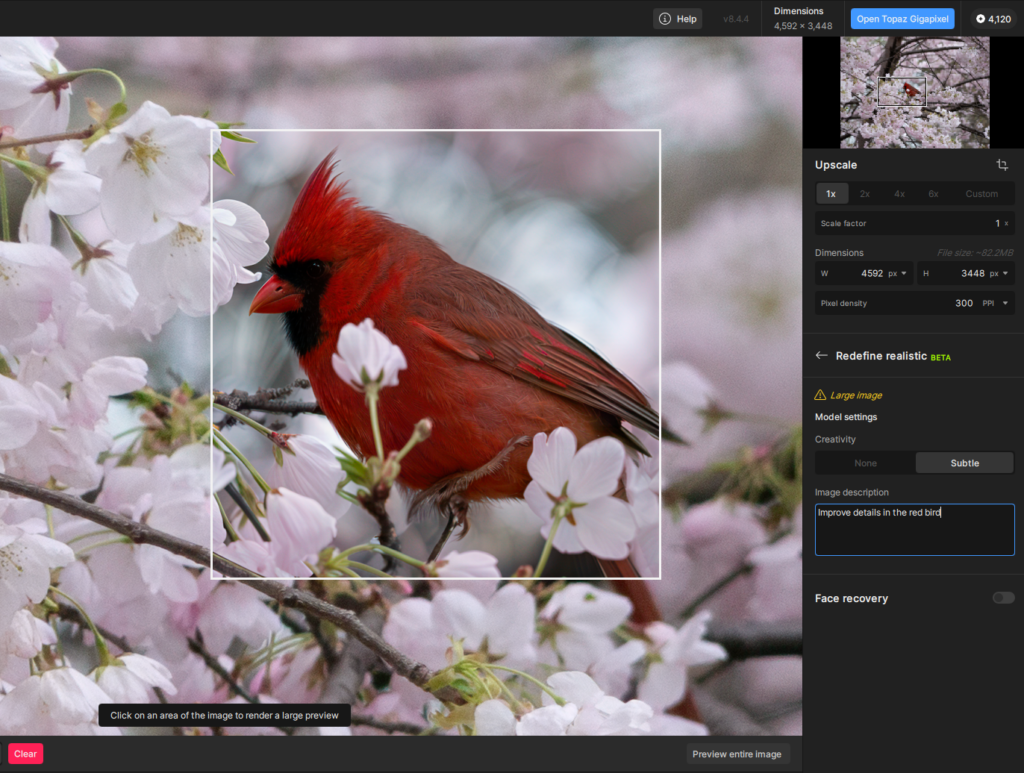
Though Gigapixel is commonly used to increase image resolution, you can see here that I did not upscale the image (Upscale = 1x).

The desktop apps (Photo Studio and Gigapixel AI) allow choosing either cloud computing or local computer resources. I chose to use my local computer, which does have a GPU. The sound of my computer suggested the GPU fans were spinning fast and Windows Task Manager told me that the GPU was running at full capacity. Using cloud computing will consume AI credits but using the local computer does not require any AI credits.
Re-processing Photos for T-shirts & Coffee Mugs

Re-processing Photos for T-shirts & Coffee Mugs


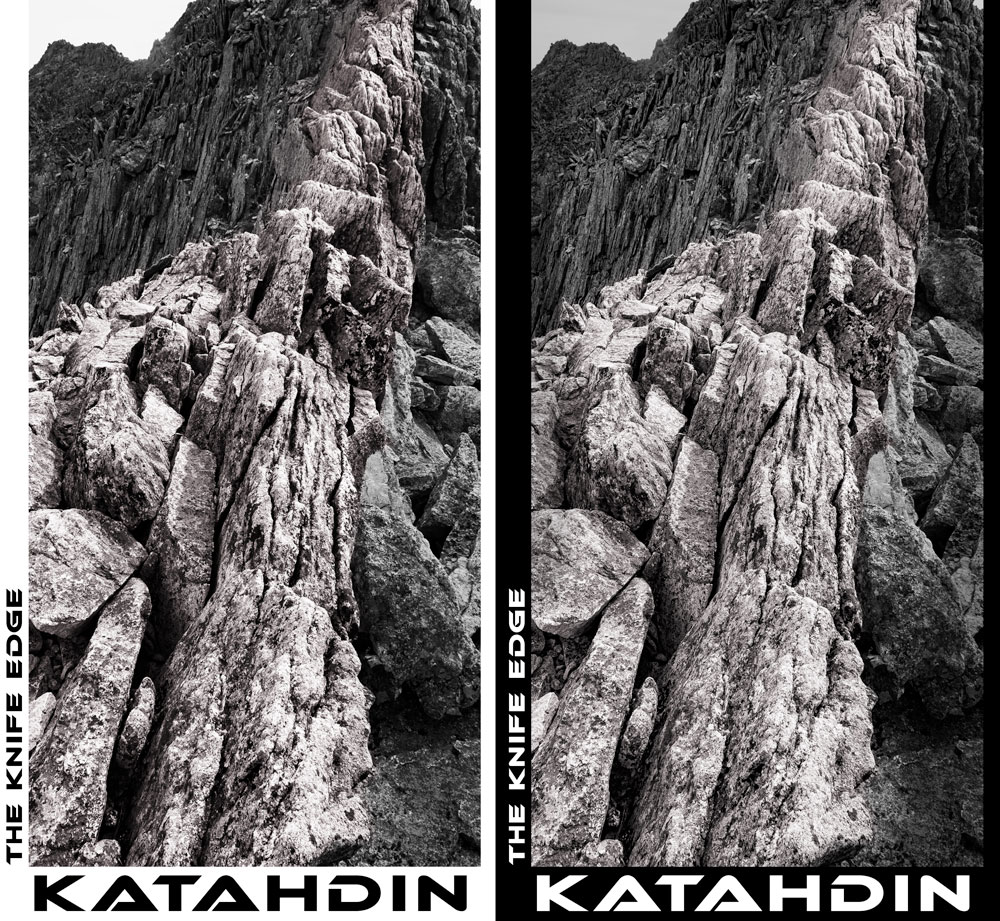
Recently I have been working through my photography catalog for the purposes of overhauling my website. At the same time, I’ve been recognizing that some images can be repurposed for graphic t-shirts and coffee mugs.  My latest design is shown here; the left version is intended to be printed on light backgrounds and the right version is intended to be printed on dark backgrounds.

My products at Redbubble:  https://www.redbubble.com/people/kevinheaven

For this particular work, I used Adobe Photoshop and multiple plugins by Topaz Labs.  To adjust the color palette and to enhance the details, I commonly use Topaz Adjust and Topaz Detail.

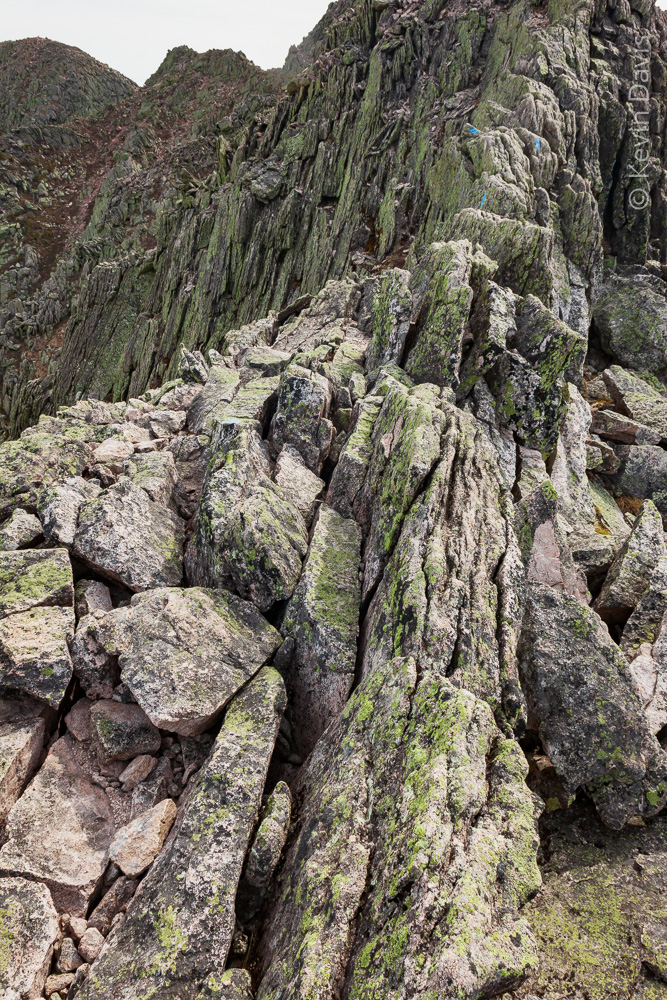
Here’s the original digital photo from ten years ago.  This was probably the first time I had ever taken a digital SLR on a backpacking trip. Because I had not yet learned the features of this camera, I neglected one of the most remarkable features of the Canon 5D mark II … the first DSLR camera capable of 1080p high-def video. To this day, I regret that I did not capture any video in this remote unique landscape.

If you look closely (click on the image to see a larger view) toward the top right of the image, you will see blue blazes painted on the rocks; these blazes mark the hiking trail … a very narrow trail with a potentially nasty drop-off.

Bread Art (Photographing Bread)

For the purpose of illustrating a theme, I was recently offered the task of photographing bread.

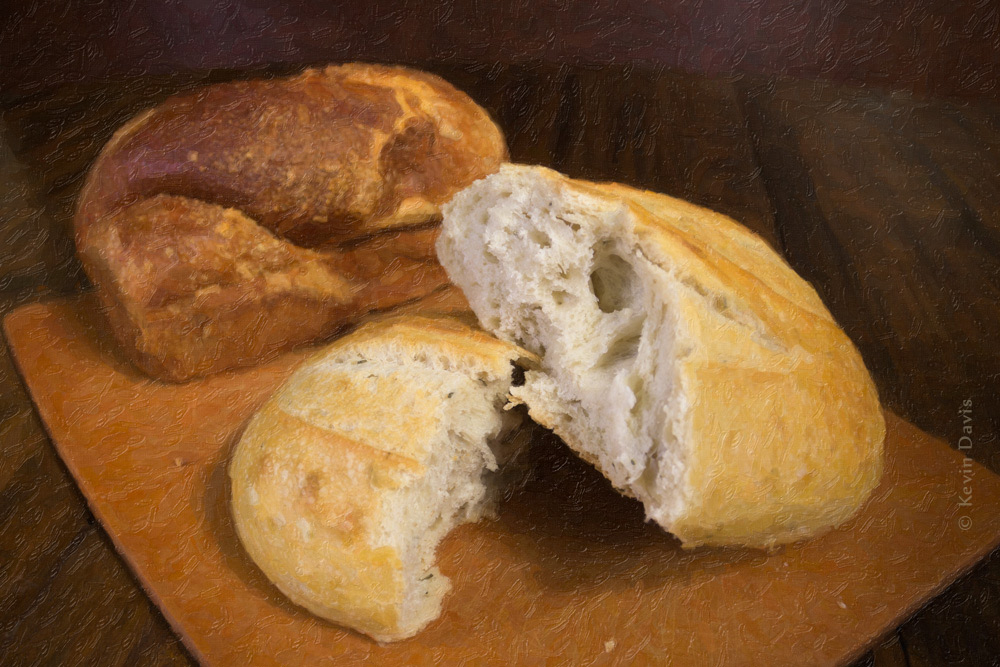
Final image (digitally modified using photoshop)

Here are the steps in making this image.

Although I originally thought this shoot might require actually baking my own bread, I quickly discarded that thought and went to my local market.  The market sells specialty loaves that are far more attractive than anything I can make.  So I purchased two different loaves of bread.

Initially, I photographed the unbroken/unsliced loaves.  Then I thought to slice the bread, but instead chose to tear it in half for a more natural look.  Good call.

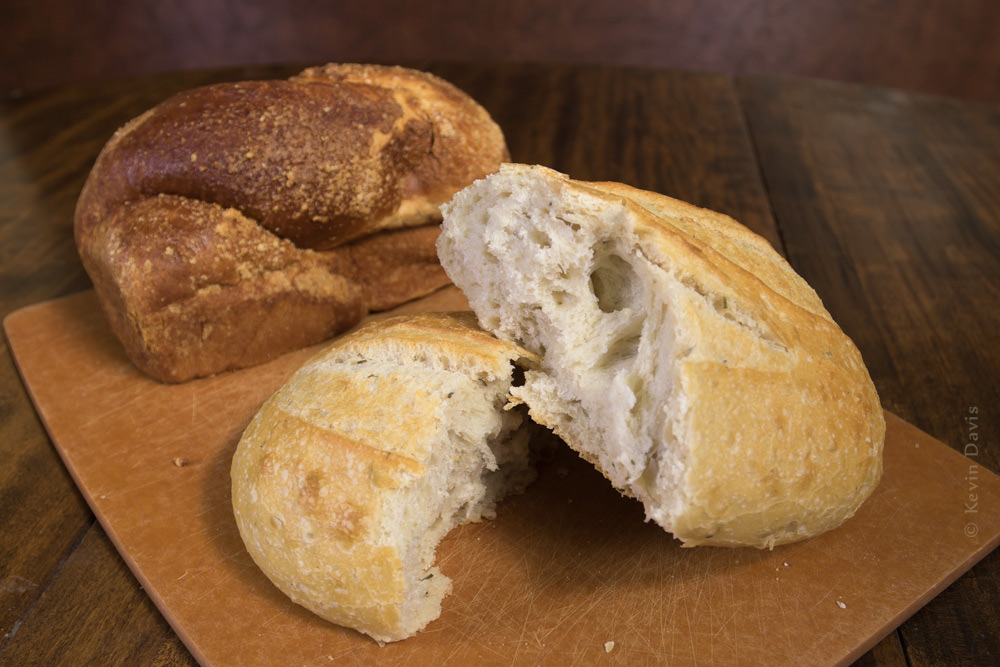
Original bread photo unmodified

After photographing for a half hour, this is the image I chose as the best.
Compare this original to the final image (shown before it).  For a larger view, click on either image.

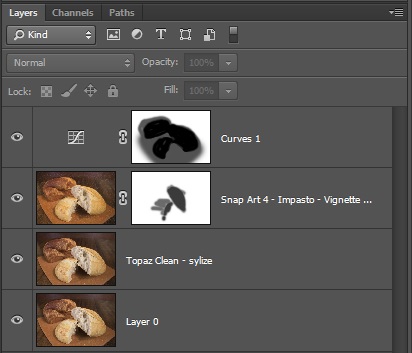
In Photoshop, I copied the image onto two new layers and applied a different filter to each layer.  The first is a stylized using a plugin by Topaz Labs. But the effect is largely obscured by the next layer above it.

The next layer applies an artistic painting look using a plugin filter called Snap Art by Alien Skin.   Through the use of a layer mask, the effect is not applied to the inside of the bread loaf.  See the layers panel snapshot below.  Where the mask is dark, you see the underlying layer.

Finally, to highlight the bread, I created a darkened vignette using a curves layer.  The final image is shown at the beginning of this blog post.

U9A3235_bread_art-layersHere is a look at my layers in Photoshop.


Oil Painting Effect on a Photograph

Oil Painting Effect on a Photograph

Toying around with some software filters, I arrived at a painterly effect that I really love … in just 5 minutes.  I’m not trying to put painters out of business – just having fun.

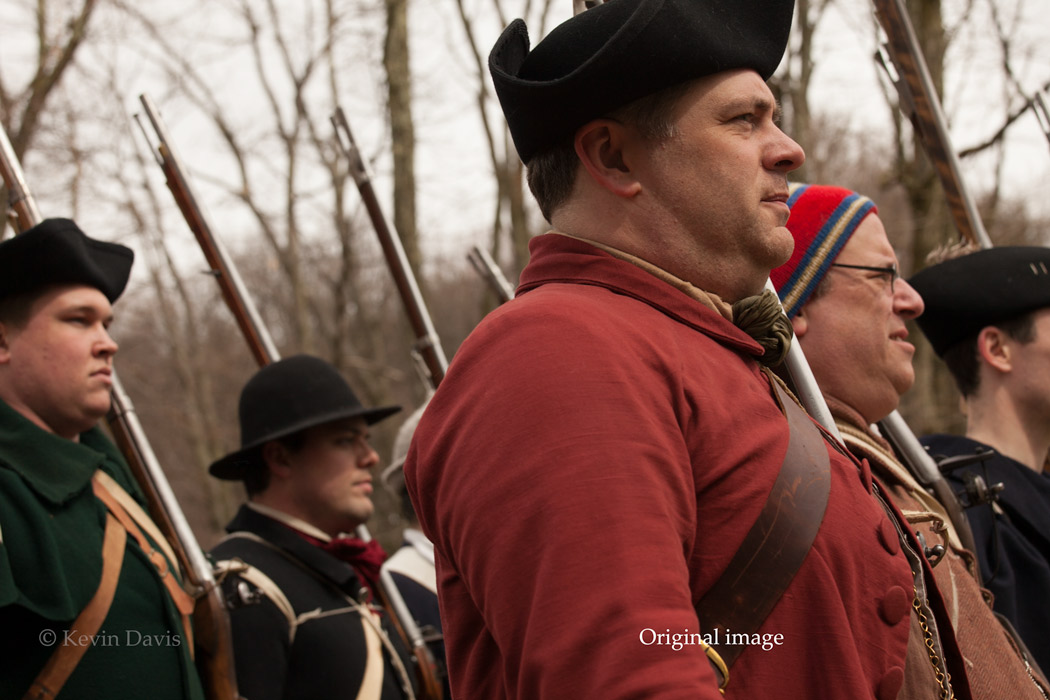
I started with an image from Lexington Massachusetts this past Patriots Day weekend.  My first experiment did not yield a compelling result.  Tried a second image, applied different filters, and shown here are all the phases of transformation.

Unmodified image
Unmodified image

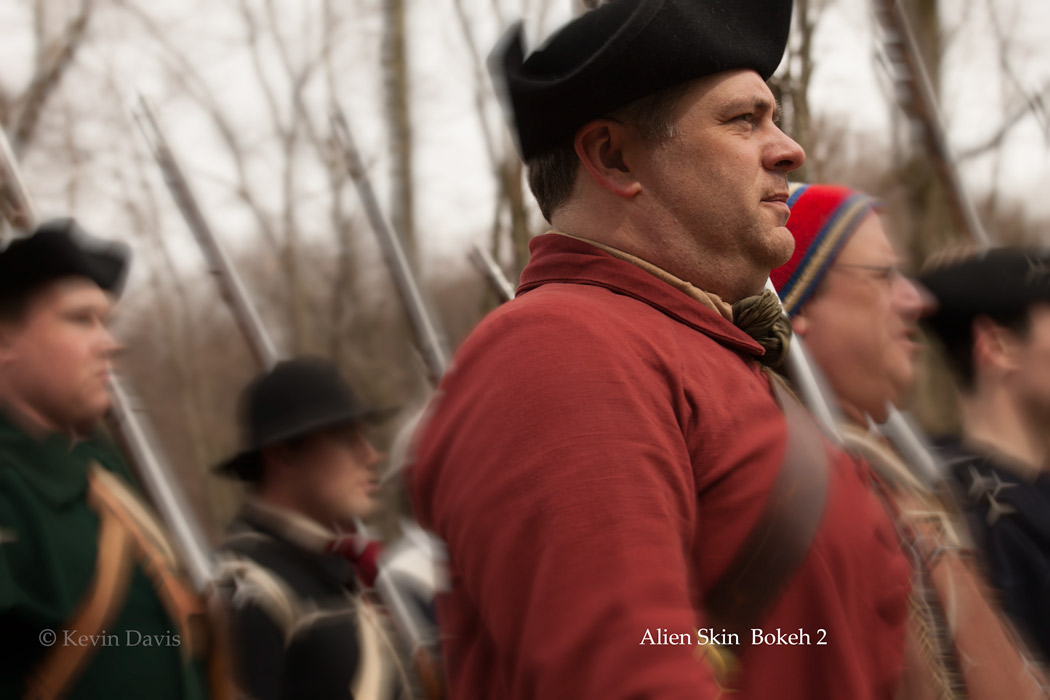
The first filter is Bokeh 2 by Alien Skin.  (This is demonstrated in my previous post: Softening a Photo with Bokeh 2)

Processed with Bokeh 2, by Alien Skin

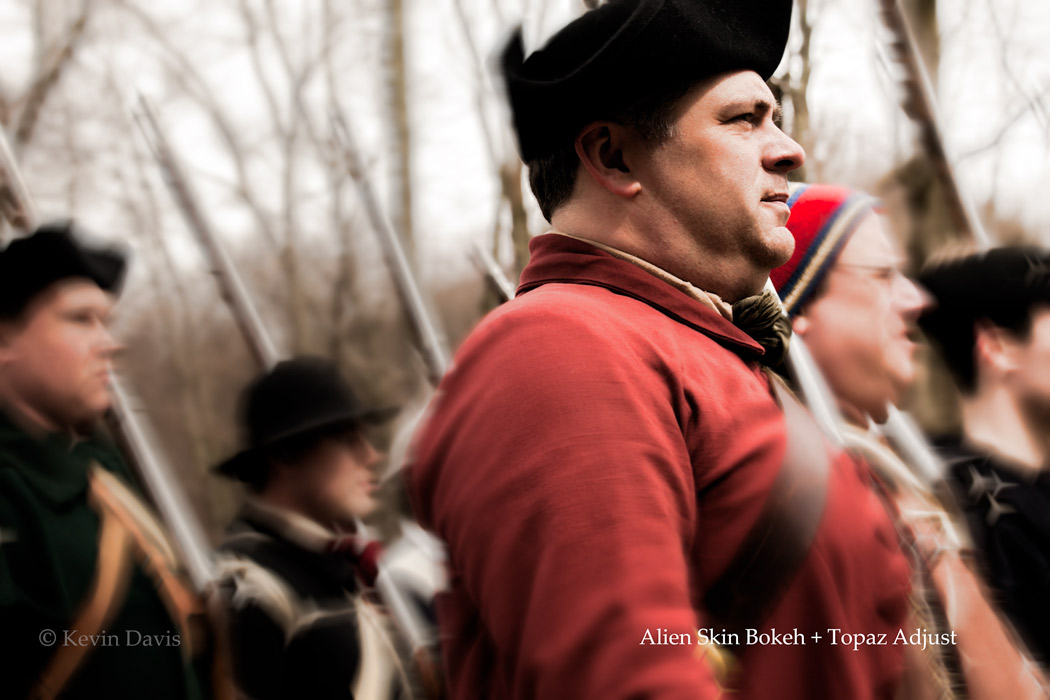
The second step is done with Topaz Adjust. Adjust is one of my favorite tricks for adding a bit of “pop” to an image that seems a bit dull, however, here I used a preset called “Low key”, which I have never found any use for until today.

Processed with Bokeh, then Topaz Adjust, preset = Low Key

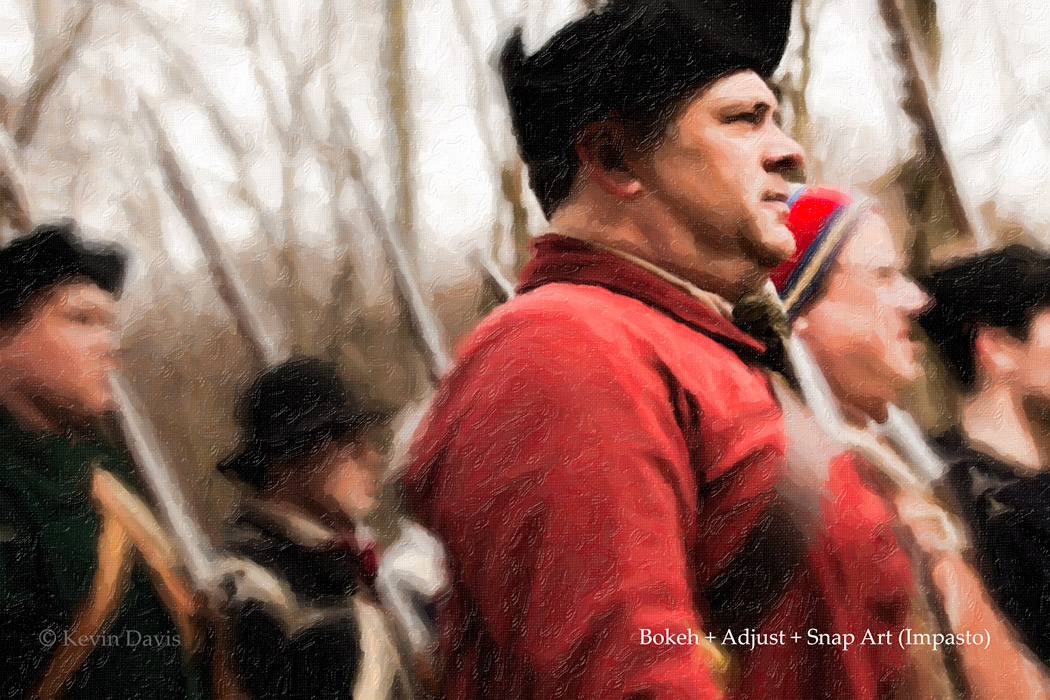
The last step is an painterly effect using Snap Art by Alien Skin.

Click on the image to see the larger view!

Processed with Bokeh and Adjust, then Snap Art

That was rather easy. Honestly, such experimental transformations are usually more difficult and end up with a result I don’t love … so, delete. I really like this one.

Merry Christmas everyone!