When the Light is not quite what you want

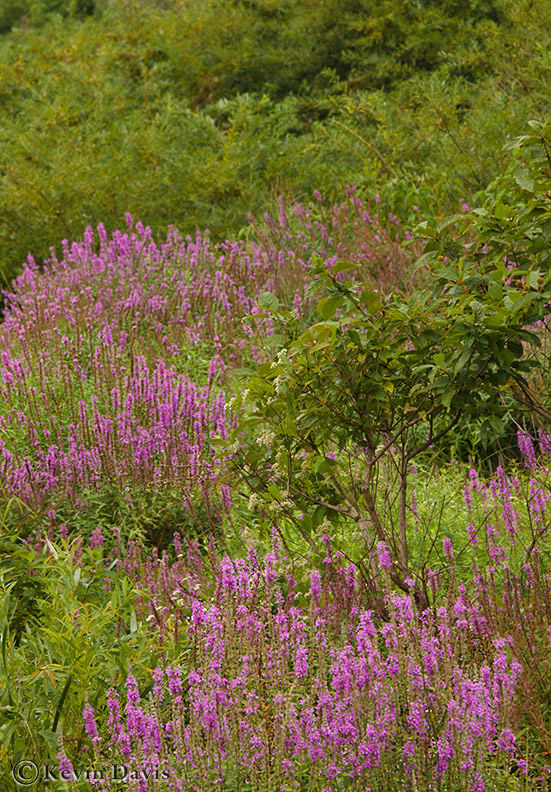
Friday evening, as Hurricane Irene thrashed the coast of Florida, the weather in New England was clear and the warm glow of the setting sun raked across the land.  I went a short distance down the road to photograph the river.   But, to my surprise, the light on the weeds and grasses was largely back-lit and unflattering.  So I planned to return and try again Saturday morning, as the weather forecast called for overcast clouds.

Soft light / overcast sky

As expected, the morning provided soft diffuse light and I snapped a few images.  To get a bit of elevation above the river, I used two familiar tools.  One, a portable telescoping ladder.  Two, a tripod fully extended and raised far over my head.  The latter requires a bit more shutter speed to compensate for the unstable camera perch. 

A bit later, after returning home, the sun was peeking through the clouds and I considered repeating my brief excursion in different light.  But, in the end, I did not.

As you can see in the image here, the soft light features no distinct shadows.  This is not automatically good or bad.  A diffuse light avoids high contrast and specular reflections, but it can also reduce sense of  shape and depth.  A moderate light from the side (side light) will wrap around a subject and enhance the subject shape.  But too much and the shadows may be too dark, loosing all details.

When dealing with natural light (not electronic flash), sometimes we can anticipate the light we want.  But sometimes, the light really is not doing what we expect or want.  When that happens, sometimes the right thing to do is simply try again after the light has changed.


Park Wildflower Project

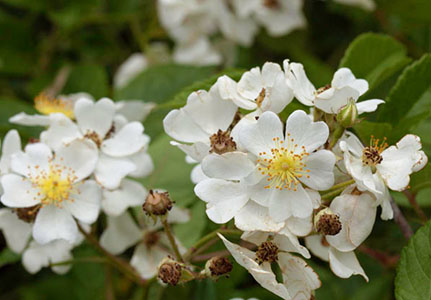
multiflora rose

Working at an office park, anyone with an inclination towards the outdoors world … simply has to get out of the office and walk.  In this course, I discovered that numerous wildflowers grow around the periphery of the park.  Being both photographer and sometimes amateur naturalist,  I began photographing and cataloging the various flowers. 

That was the humble beginning of what I will refer to as the Park Wildflower Project.  My catalog is more than 60 species …  but I’m not done yet.  I find it necessary to return frequently.  From year to year, the species can vary.  (This year, Common Tansy has invasively taken over the northwest meadow.)  I find flowers that I have not seen before;  and I no longer find some of those that I have seen.

 For identification, I rely primarily upon two books.  For a quick visual reference, I like “Wildflowers in the Field and Forest” by Clemants and Gracie.   But that’s not always enough.   Newcomb’s “Wildflower Guide” is absolutely essential !


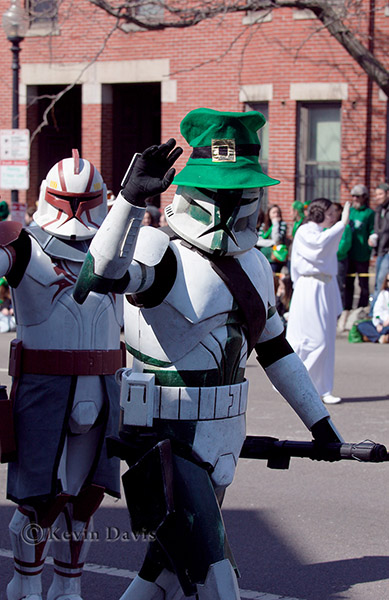
St.Patricks Day Parade in Southie

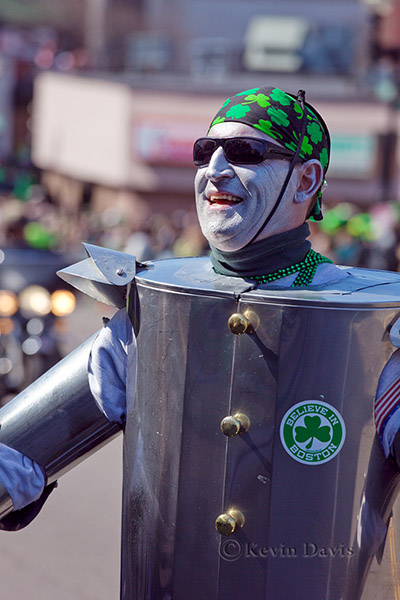
From California to Georgia, there are a dozen notable St.Patrick’s Day parades that are staged annually in the United States.  But the mac daddy of them all occurs in South Boston.  In 1737 the Irish Society of Boston hosted the first parade to honor St. Patrick’s Day.  Today, this parade can draw a crowd of spectators numbering more than 800,000.  You won’t find big expensive floats like the Rose Bowl Parade or Macy’s Thanksgiving Parade, but come on now … the Irish are bit more down to earth.  This parade is a casual affair.  People have fun.

Above all else, anyone thinking of attending this event should be aware of one thing … don’t expect to find a parking space!  Take public transportation.  Parking in Southie is a scarce on normal days; but when the parade route is cleared of all parked vehicles, those displaced vehicles (belonging to local residents) fill every available nook and crany.

 The light was a bit challenging this year … bright sun and deep shadows.  In such situations, a little fill-flash is often the solution to reducing unwanted facial shadows.  Though I had a flash in my bag, I neglected to use it because it has been quite some time since I have done a shoot in this light.   This means a lot more work in post-processing to recover the shadow details (not something I really want to do if I can avoid it.)

(click on an image to see a larger view)

http://www.saintpatricksdayparade.com/boston/boston.htm

Custom PhotoBook

My most recent book was created with Photobook.  Photobook has several branches all over the world; I used Photobook America, located in Toronto.  Time to print with Photobook was significantly longer than past experience with Blurb and MPIX.  Perhaps related to two factors.  This latest book has a silk cover with a photo inset into a center window.  And I ordered multiple copies.  Blurb will print a book with full-bleed photo cover in just a few days. And  have seen MPIX (outsourced to DigiLabs) create books literally overnight.

At the time I printed with Photobook, both Photobook and Blurb had recently begun offering a new premium paper option called “luster”.  I tried it.  But honestly, looking at four books printed over a time span of 18 months, printed by three different companies …  I don’t see a significant difference in image quality.  They all have a slight sheen to the surface. Maximum black density is similar.  Image quality is entirely comparable.  As near as I can tell “premium” paper options provide only two differences: thickness and opacity.  All three companies print with an HP Indigo digital press. 

Photobook’s downloadable software is called Photobook Designer.  I found it easy to use; very comparable to Blurb BookSmart and (MPIX/DigiLabs) My Photo Books.  However, there was one problem.  For my title page, I created a graphic image with transparent areas, saved as a PNG file. The Photobook Designer software recognized PNG files with no problem.  The preview (prior to upload) looked great.  But when the book was printed, the title-page graphic was unrecognizable.  (I also used a PNG on the final page of the book and this printed just fine.)

I contacted Photobook support twice via email, including a screen-capture from the book preview (what it should look like), but received no responses; apparently their support systems were down for more than a week.  Upon calling via telephone, someone readily worked to assist me with the problem.  The book is actually printed from a PDF and they shared this PDF with me; my title page graphic was mutulated.  The problem was not the press.  The problem was not on my end. Something went wrong in upload or translation to PDF.  But because their web site states only support for JPG and TIFF, they suggested that PNG files are not guaranteed.  Photobook would not reprint the books at zero cost to me.  They did reprint the books at a deeply discounted price, after I replaced the PNG with a JPG.  (This was not a trivial replacement. I originally used PNG because it supports transparency; JPEG does not.)

This latest book was simply a personal collection of favorite images from the past year.  A couple of the images are shown here.  Click on the image for a larger view.

For more information about comapanies that help you create custom photobooks,
I recommend PhotoBookGirl.com.  (I am not affiliated with PhotoBookGirl; but I find
it is a good source of information.)

Trees @ Mt.Auburn

Trees @ Mt.Auburn

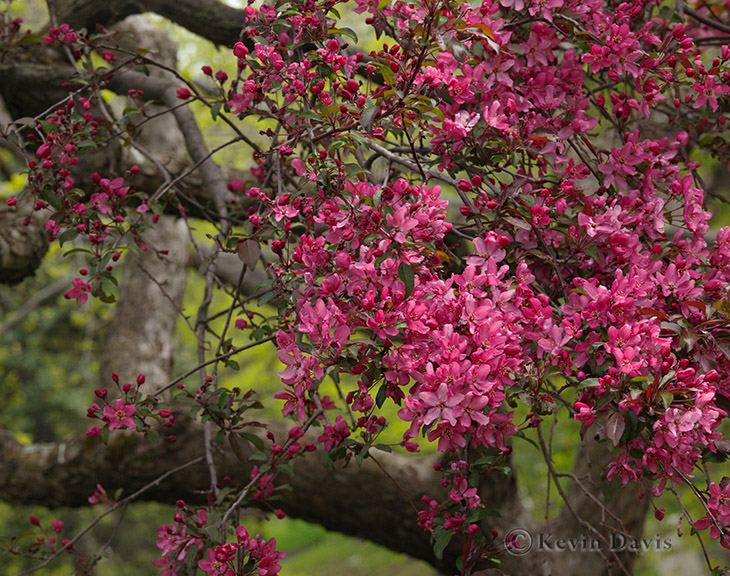
When you get the urge to make some outdoor photographs, do you have places that you return to repeatedly?  Would one of those places be a cemetary?   Likely not.  But, Mt.Auburn cemetary (in Cambridge Massachusetts) hosts a marvelous array of flowering trees.  It really is a beautiful place, (with or without tombstones).

Today, I received another canvas print (from ArtisticPhotoCanvas.com) of an image from Mt.Auburn.  So, I am just sharing this image with you, along with another Mt.Auburn image, which I had printed earlier this year (also printed on canvas by APC).

   (To see a larger version, click on the image)


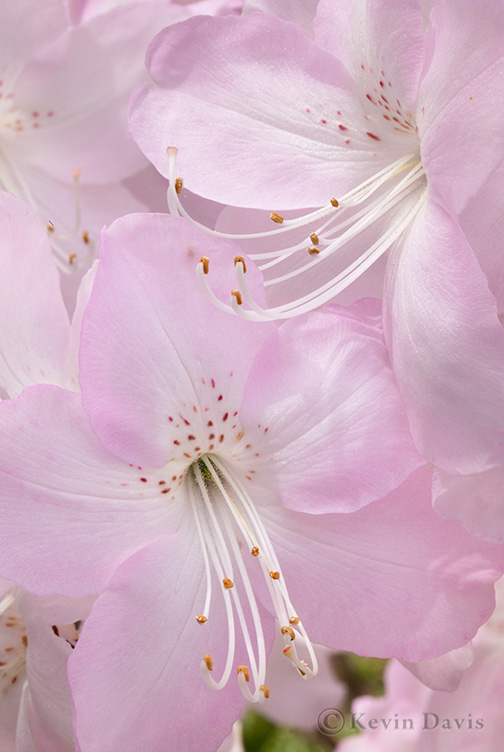
The most recent print is apparently an azalea shrub, though I do not know the exact species.  It is photgraphed with a Canon 100mm f\2.8L macro lens.  (My experience has been that this lens is superior to using a non-macro lens coupled with an extension tube)

The second is a crabapple tree, photographed with the Canon 70-200mm IS f\4.

Fir branch under ice


Hiking in the white mountains of NH on Dec.1, there was no snow at the trail head, but eventually became a foot deep. Having made such a mistake once before (several years ago), I kicked myself for doing it again.

It was a long cold day, but there were rewards. In particular there were a few little streams that crossed the trail with small waterfalls only a few inches in height. The spray of water caused some interesting ice formations, including the one shown here. The fir branch was covered in ice, but the mossy rock beneath it was not, presumably because the movement of the water was enough to prevent freezing.

In retrospect, the choice of aperature plays an important role in the success of this image. Both the extreme foreground and the extreme background are slightly out of focus. However, I wish I had framed the image a bit more to the left to avoid the ice touching the left edge of the frame.

Click on the image for a larger view.

Canon EOS 5D mk II, 70-200mm (@ 170), ISO 800, f/7.1, 1/200 sec

The Third Sheep

Often, I will plan to be at a certain place at sunrise in order to photograph with the warm sunrise light. However, on this particular day, the weather forecast called for cloudy and cold. So I did not leave my motel room until 7:30am and only then found that some sun was dodging through the cloud cover.
Looking at a map, I chose some back roads to explore. The first road followed a river, but I saw nothing that caught my photographic intentions. Then I drove off through some farmland and stumbled upon these sheep, grazing on a hillside covered with frost. Atop the hill, the sun was catching the orange leaves of autumn maple trees. At the bottom of the hill was a still pool catching reflections.
Just a bit of sunlight on the trees, combined with general cloud cover, the conditions were fleeting and did not last. I captured about a dozen images; this is one of my favorites.
Where is the third sheep? Uphill, further toward the trees, out of frame … but appears in the reflection.

Canon EOS 5D mkII; 70-200mm @ 200; ISO 800, 1/320, f/10

Water Lilly

Paddling the river this evening, I had planned on a quick trip; however, I stopped a half dozen times to photograph flowers (aquatic or nearly so). The day was waning and yet another stop may mean I would finish my trip in the dark. But each time I stowed the compact camera safely in my dry bag, I soon found another reason to dig it out of the bag yet again. This continued until the battery expired.

Tall Ships

After some financial wrangling, the tall ships did come to Boston, though there were a few oddities. If I understand correctly, there was no formal parade of sail. And a few of the tallest ships were berthed at piers that were frequently closed to the public.

With weather forecast for sunny skies, Tom S and I arrived at South Station shortly after 7am to catch some good morning light. However, our plans were soon foiled as we discovered that the Fish Pier and World Trade Center pier were entirely closed to the public until 5pm. After conversations with several police and pedestrians, we opted to take the water taxi to Charlestown Navy Yard and so achieved some nice images from out on the water. The attached image shows the Kruzenshtern as the water taxi came around the World Trade Center pier.

In Charlsetown, we were among the first group of people to board the Picton Castle and Bluenose II, before the crowds and long lines formed. USS Constitution, permanent resident in Charlestown, was undergoing major renovations, but still earned a very long line of eager spectators. We skipped it, thinking it is here year round and there is no need to wait in line today.

By 11am, the light was harsh and we called it a day. Shooting film that morning, Tom dropped off his film at a local lab where it was processed within a couple hours. Though I was shooting digital, Tom beat me to the punch, posting a couple of scanned images in email before I could complete my digital workflow.
.

Trillium

Here is a very different type of image from Katahdin / Baxter State Park.
 
 
Both painted trillium and purple trillium are common in the northeast forests and both have a very small window of time during which they bloom, maybe three weeks. Purple trillium are more difficult to photograph because the flowers have a nodding presentation (the flowers droop over and face the ground).
 
 
What always catches my eye is groups of these flowers. Typically they are solitary plants, so a cluster of them is a nice find. For this shot, I used a wide-angle zoom lens with an extension tube. Without the extension tube, focusing distance is perhaps 14 inches. With the extension tube, I can get much closer to the flower, reducing the distance about 50%.
Canon 5D mk II, ISO 400, f/14, 1/6 sec (on a tripod of course)
.