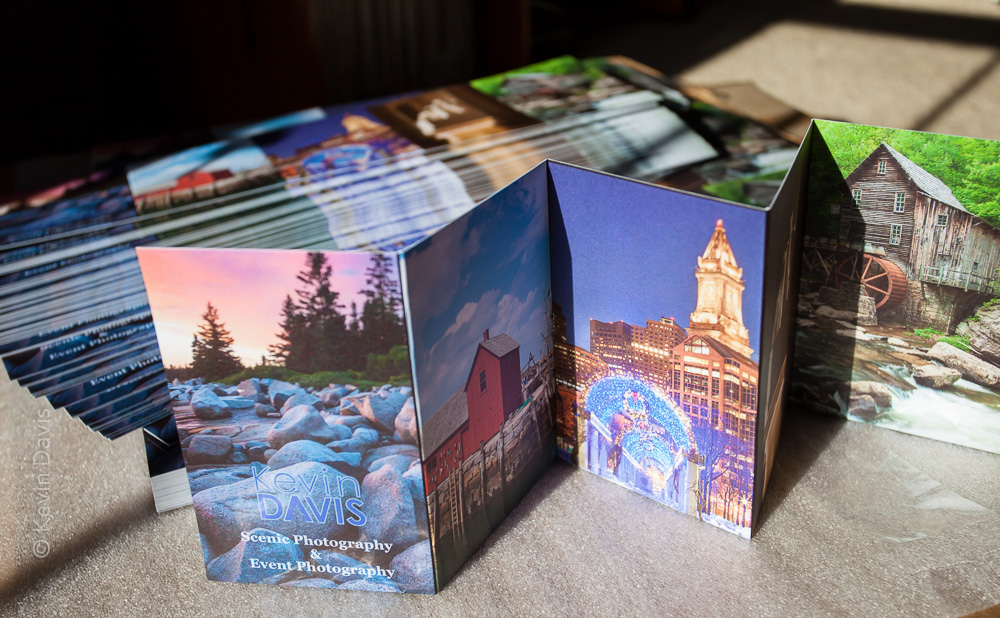
Here’s a marketing/promotional item I created recently.
Accordion card
This accordion card has 5 pages front & back, for a total of 10 faces. The five images you can see on this side are scenic photos. The other side has four event photos, two sporting events, and two non-sport. The last panel has info about me, including my contact info.
The quality of the piece is excellent. I am very pleased with how it printed. It was printed by Miller’s Lab on “classic felt” paper, 130# / 325 GSM. Each folded card is 3.5 x 5″. In retrospect, I am very happy with the size; small enough to fit in any pocket, yet large enough that the photo quality is clearly evident. Although Millers does offer an optional coating on the felt paper, I had their paper samples in hand and judged that a coating wasn’t necessary; I am glad for that decision. Unfortunately, the lab does not fold them, as you can see the flattened cards in the background of the photo here. I had to fold them all. Envelopes are provided.
Here are a few vendors that provide accordion cards.
# of pages / # of panel faces / dimensions
The grey season. In the northeast, wintertime without snow is a drag, particularly for outdoor photographers. I need some snow here. Not just on the ground – we need snow sticking to tree branches.
This winter has brought a fair amount of precipitation, but it’s been rain rather than snow. What little snow we’ve seen has quickly washed away as snow turned into rain. So here are a few shots from last winter.
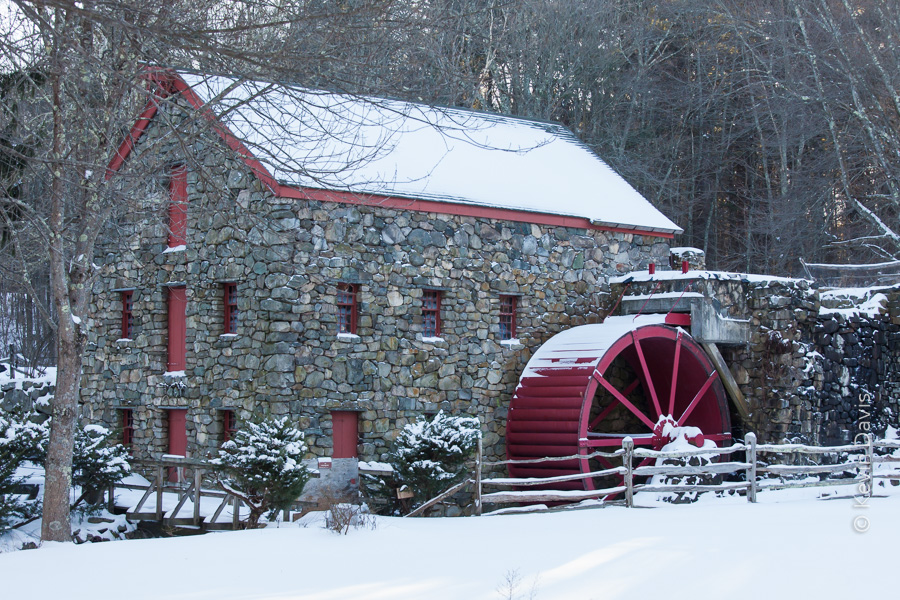
Old grist mill, in winter
The first is an old grist mill. It is pretty – I hope that much is obvious. However, the light may not be obvious. The orientation of the mill and surrounding trees doesn’t catch much direct sunlight. The sun is setting on the other side of those trees. The light is what it is and there’s no changing it.
In photography, we have to be aware of the orientation of the subject with regard to the light. When the light on the subject is not what we would prefer, you can sometimes move the subject, but not if the subject is a building. You can sometimes move the light, but not if the light happens to be the sun. You might come back at a different time of day, when the sun is in a different position. However, I believe this mill is in shadow of the trees both morning and evening.
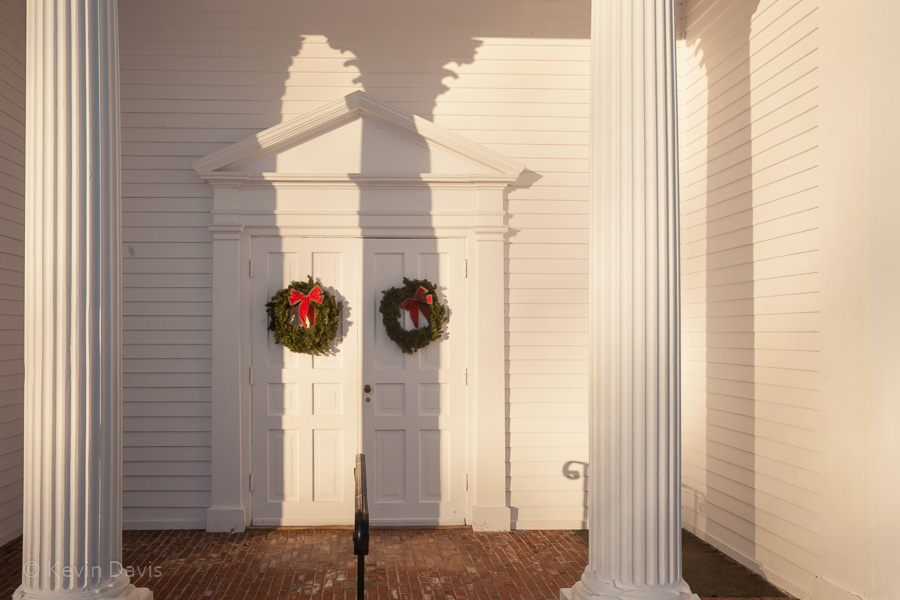
Church at sunset
Sometimes, in outdoor photography, using only available light, there’s nothing you can do to change the light on the subject. But you might find a different subject to photograph. Across the street, a church was catching the light of the setting sun. So, I photographed the church. And next to the church is a historic one-room schoolhouse. Nice light, eh?
(To see a larger view, click on any image. )
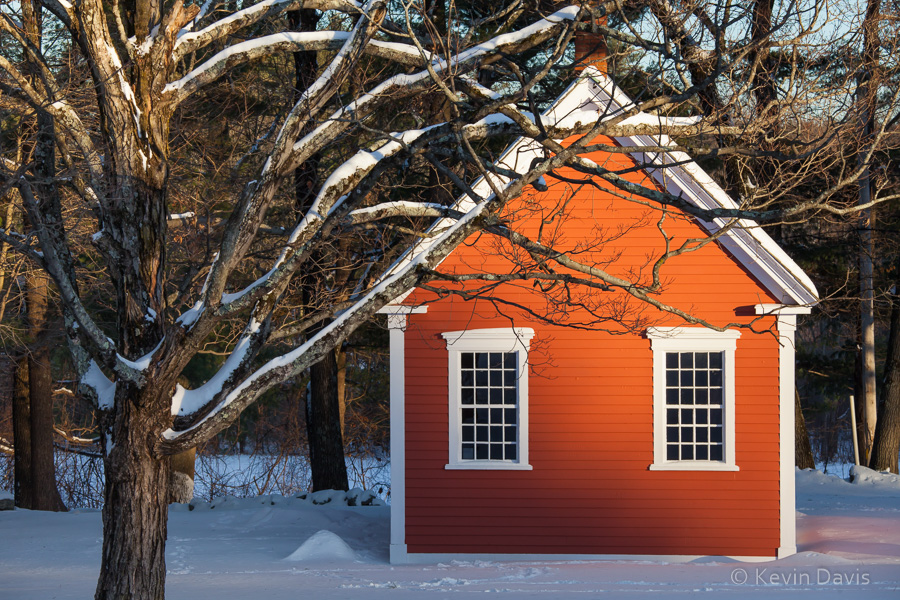
One-room schoolhouse
I included this last image (schoolhouse) in a recent 2015 wall calendar.
As recently as 1983, the world record for largest pumpkin was still less than 500 lbs.
Just twenty-nine years later, 2012, the world record had increased four fold … 2009 lbs, established at the Topsfield Fair. The first pumpkin ever to weigh more than one ton.
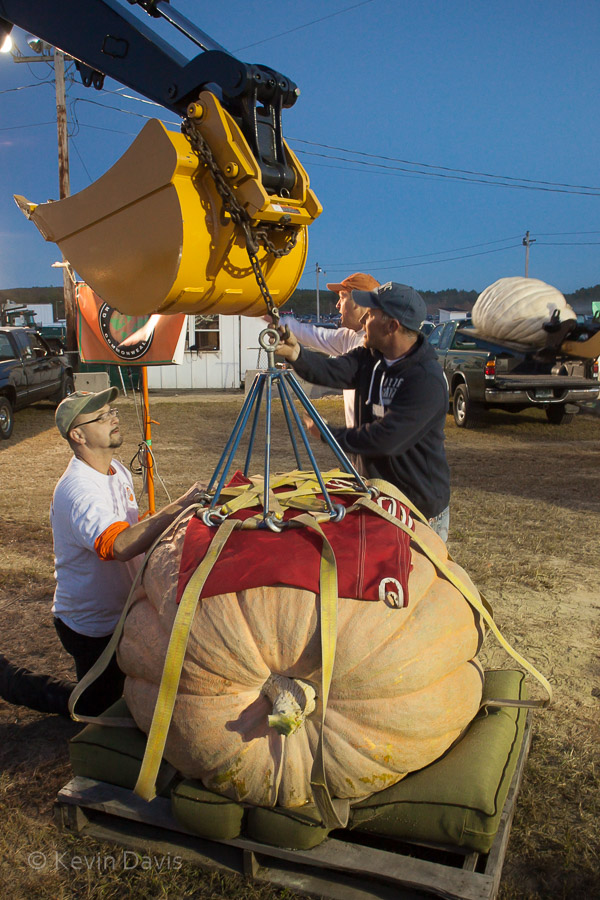
The photo here shows the giant pumpkin weigh-off competition at the 2012 Deerfield Fair. A new world record was established, but the record only lasted one day, as the record was beaten the very next day at Topsfield Fair. (Happily, I was preset at both these competitions.)
In 2014, the title moved to Europe. 2323 lbs, grown in Switzerland.
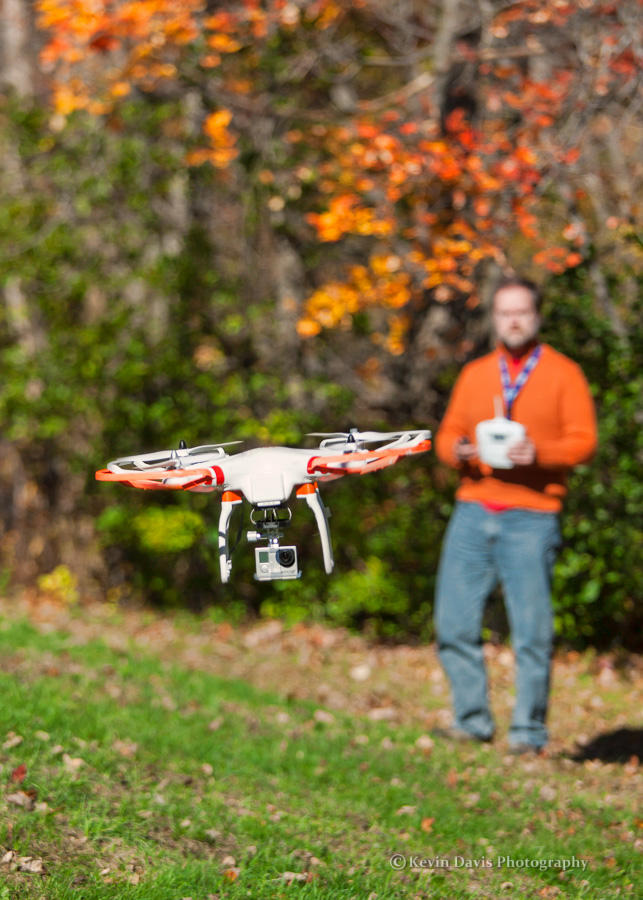
The term “drone” is commonly used in pop media, more common than alternative terminology UAS (unmanned aircraft system) or UAV (unmanned aerial vehicle). To my mind, a drone implies an automated military device – I prefer the term quadcopter.
As far as you or I are concerned, we serve as the remote pilots while standing on terra firma. We operate a radio transmitter while the copter is equipped with a matching radio receiver. Different radio systems are available and they are not all compatible. For example, some communicate via a 2.4 GHz radio frequency, while others utilize a 5.8 GHz. The differences are not limited to radio frequency alone.
Anything that is labeled as Ready-To-Fly (RTF) will include a radio transmitter that is compatible with the drone. If the product is not advertised as RTF, it may not include a transmitter, which is preferable for anyone who intends to re-use an existing transmitter they already have.
3D Robotics Iris+ … $750
3D Robotics RTF X8 … $1,350
Blade 350 QX – $470
DJI Phantom I … $400
DJI Phantom II Vison+ … $1,300
Gaui … 330X … $400
Gaui … 500X … $1,150
Gaui … 540H / hexcopter (6 rotors) … $600 does not include transmitter
Parrot AR drone … $300
Quantum Nova … $320
Quantum Venture … $400
TurboAce Matrix … $900
HUBSAN X4 H107C-HD
SteadiDrone QU4D … $1700
Walkera QR X350 … $400
Walkera QR 800 … $1,700
Walkera TALI h500 / hexcopter (6 rotors) … $1900
For aerial photography purposes, you need a stable device that is easy to control – consider electric copters only. Gas-powered machines are loud, extremely fast, and potentially very dangerous.
The rotational force of a single-rotor will tend to rotate the entire machine; this is why traditional helicopters have a small tail rotor, to counteract the rotational force. Coaxial dual-rotor designs solve the rotational force problem by spinning two rotors in opposite directions, but this reduces the total lifting force. Multi-rotor copters, with four or more independent rotors, solve the rotational problem by spinning half the rotors in a clockwise rotation and the other rotors in counter-clockwise rotation.
I expect (but have not verified) that all of the copters listed above are capable of lifting a small camera. In the cases of some smaller copters, I had doubts and so did not include those in this list.
Please note that most of these copters will rely upon rechargeable LiPo batteries, for which I offer two tips. A single battery might give you eight minutes of flight or twenty minutes of flight – so do have more than one battery. These batteries are relatively high power devices and there have been stories of such batteries causing fire, sometimes during the charging process. Do use protective LiPo storage bags such as LiPo Safe.
The most commonly used camera for these copters is a GoPro 3 or newer (e.g. Go Pro 3, Go Pro 3+, or GoPro 4). Personally, I have used the Hero 3+ Black Edition; while I find that it captures great video, I am not impressed by the still image JPEGs. Listed here are some of the available small “action cameras”, all of which I expect are primarily intended for video.
CamOne Infinity
Contour+2
ContourROAM3
Drift Ghost-S
Garmin VIRB Elite
Gear-Pro HD Sport Action Camera
GoPro HERO3+
GoPro HERO4
Ion Air Pro 3
JVC GC-XA2
Mobius Action Camera Pro
Polaroid XS100i
Polaroid Cube
Replay XD Prime X
Sony AS20
Sony HS100V
The last component for aerial photography is perhaps the first component to select when building a new system. A motorized/computerized gimbal is necessary for aerial video, to remove the unwanted effects of aircraft movement. The gimbal holds the camera, detects aircraft movement, and automatically moves the camera to counteract the aircraft movement. Without one of these devices, your level horizon will be ruined anytime the copter moves left or right. Gimbals are often designed to match the size and weight of specific cameras. So, if you are thinking of using a specific camera, you need to be sure that you can get a gimbal that accommodates that camera.
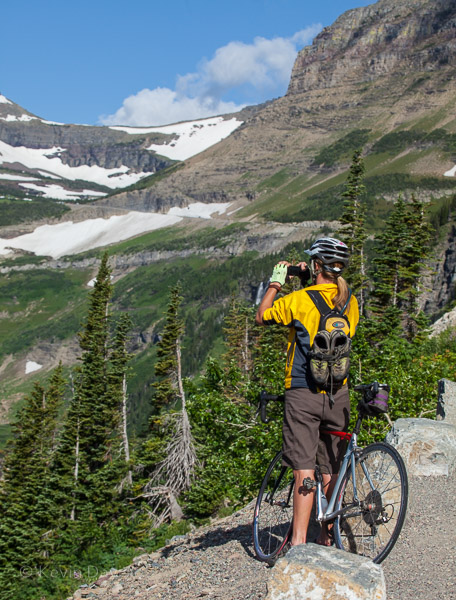
Bicyclist making a photograph at Glacier National Park
The National Forest Service wants to charge you a large fee to make photographs on national lands (national forests or national parks). The proposal covers “still photography and commercial filming” … without any further clarification, that seems to include you making a photo with your camera phone.
The proposal, an iterative evolution of past interim proposals because past efforts have been unclear.
Do check it out ASAP. The Forest Service is accepting public comments until November 3rd. You can easily provide your input on-line at the link above. I did.
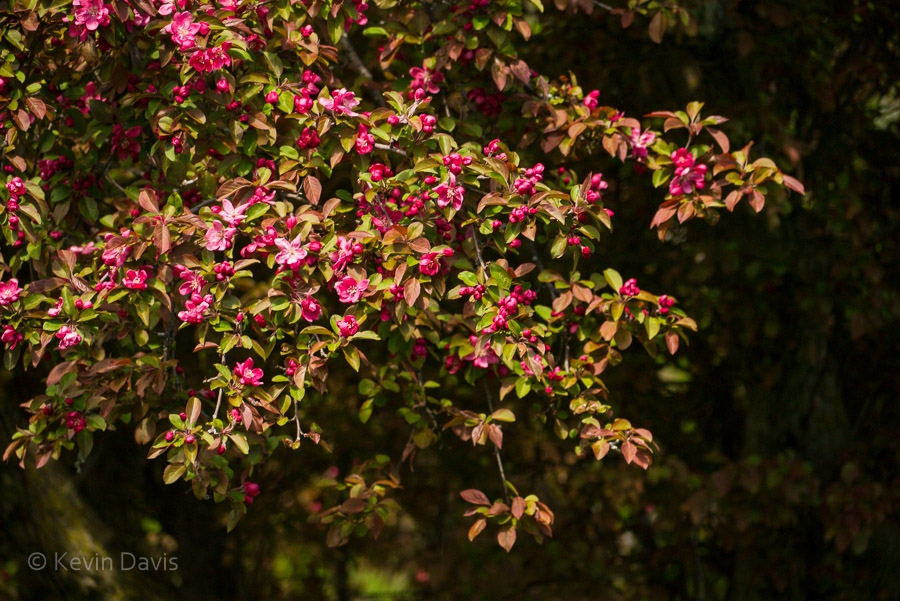
May is the month for flowering trees! You’ve probably seen a few lately. Some of my friends don’t seem interested in specifically what type of tree they are looking at … but I certainly am interested.
How about the photo here at the top – do you know this one? Magenta flowers with green leaves. Flowering crabapple.
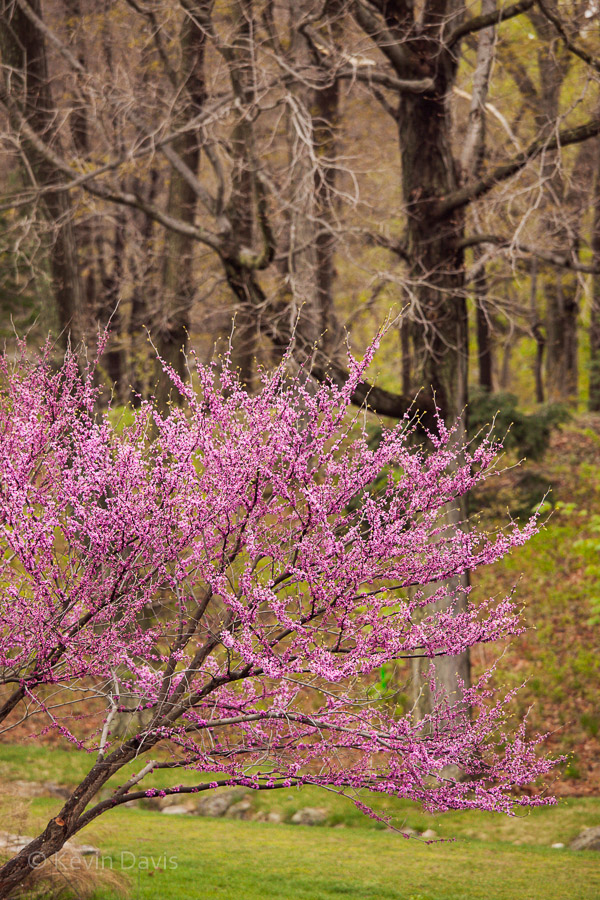
How about the next one? Pink & magenta flowers, clustered close along the branches, and the leaves aren’t particularly showing yet. Eastern Redbud.
Pink / magenta flowers, closely following the branches.
(Click on either image for a larger view.)
As for trees with magenta flowers, there are only two others that are common. Magnolia flowers can range from mostly magenta, with a bit of white, to mostly white with a bit of magenta. (The latter is more common.) Uniquely, magnolia flowers are larger than any of our other common flowering trees.
The last one is tricky. The flower buds, before blooming, can be magenta color. The flowers in bloom look like bright pink carnations. That’s a Kwanzan Cherry; there is nothing else like it.
1) FLASH TRIGGER GUIDE – MANUAL RADIO TRIGGERS
2) FLASH TRIGGER GUIDE – TTL & REMOTE MANUAL RADIO TRIGGERS
3) PORTABLE FLASHES WITH BUILT IN RADIO TRIGGERS
Photographers are crying foul, rightfully so … but let’s try to understand what’s going on by stepping back and looking at the big picture. Why has Getty done this … and will other agencies follow suit?
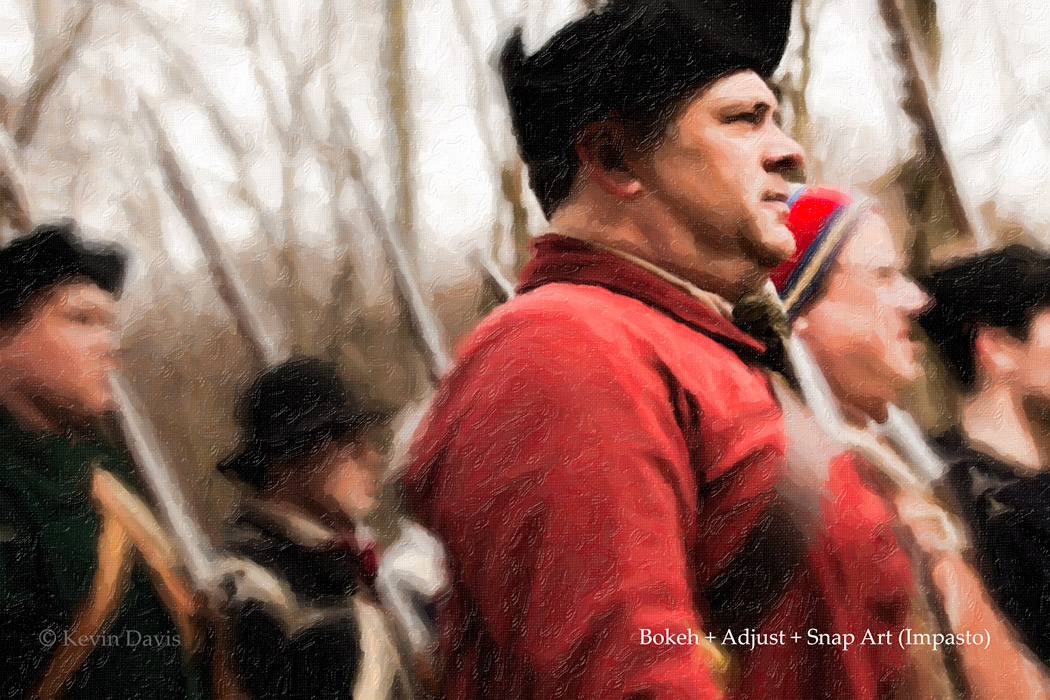
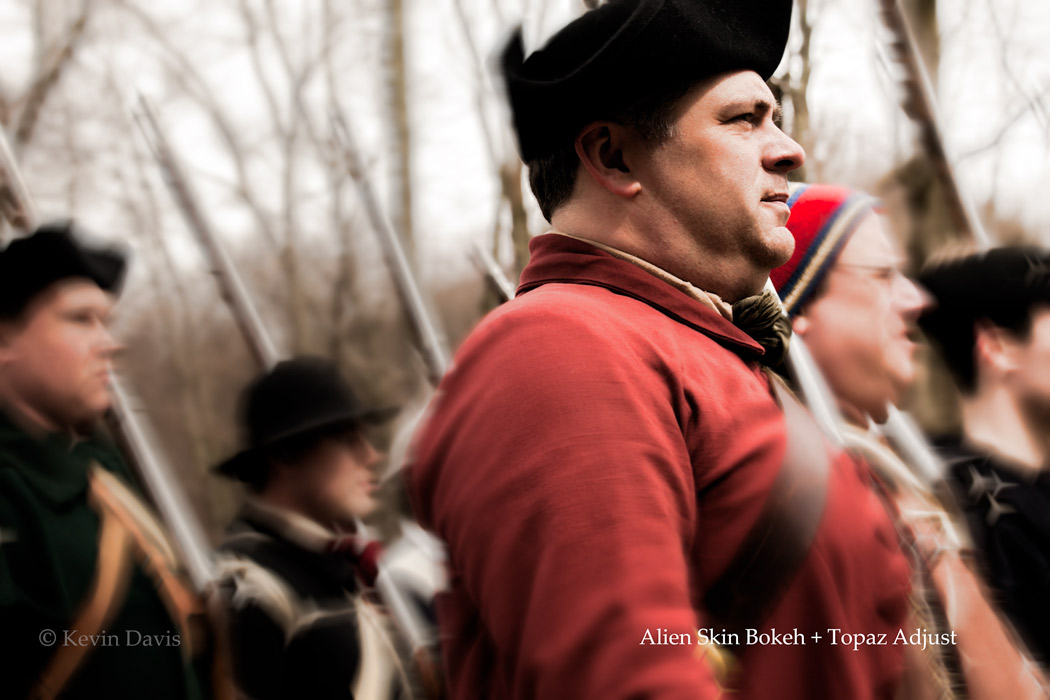
Toying around with some software filters, I arrived at a painterly effect that I really love … in just 5 minutes. I’m not trying to put painters out of business – just having fun.
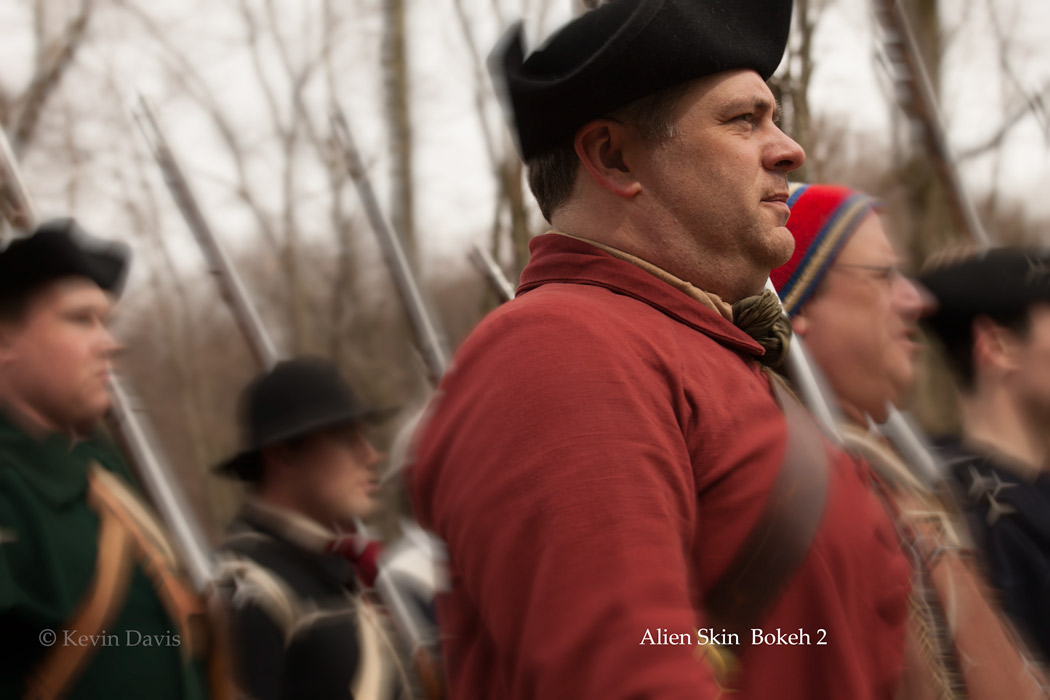
I started with an image from Lexington Massachusetts this past Patriots Day weekend. My first experiment did not yield a compelling result. Tried a second image, applied different filters, and shown here are all the phases of transformation.
The second step is done with Topaz Adjust. Adjust is one of my favorite tricks for adding a bit of “pop” to an image that seems a bit dull, however, here I used a preset called “Low key”, which I have never found any use for until today.
Processed with Bokeh, then Topaz Adjust, preset = Low Key
The last step is an painterly effect using Snap Art by Alien Skin.
Click on the image to see the larger view!
Processed with Bokeh and Adjust, then Snap Art
That was rather easy. Honestly, such experimental transformations are usually more difficult and end up with a result I don’t love … so, delete. I really like this one.