Park Wildflower Project

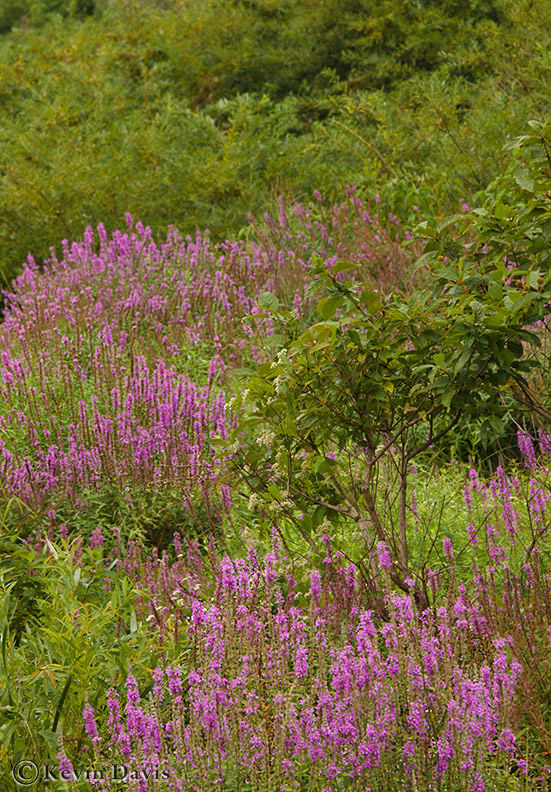
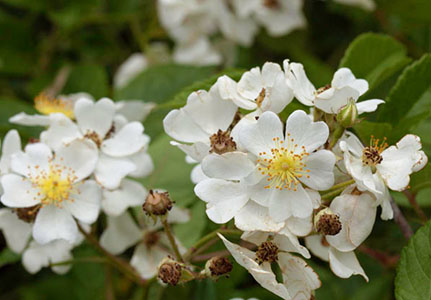
multiflora rose

Working at an office park, anyone with an inclination towards the outdoors world … simply has to get out of the office and walk.  In this course, I discovered that numerous wildflowers grow around the periphery of the park.  Being both photographer and sometimes amateur naturalist,  I began photographing and cataloging the various flowers. 

That was the humble beginning of what I will refer to as the Park Wildflower Project.  My catalog is more than 60 species …  but I’m not done yet.  I find it necessary to return frequently.  From year to year, the species can vary.  (This year, Common Tansy has invasively taken over the northwest meadow.)  I find flowers that I have not seen before;  and I no longer find some of those that I have seen.

 For identification, I rely primarily upon two books.  For a quick visual reference, I like “Wildflowers in the Field and Forest” by Clemants and Gracie.   But that’s not always enough.   Newcomb’s “Wildflower Guide” is absolutely essential !


Trees @ Mt.Auburn

Trees @ Mt.Auburn

When you get the urge to make some outdoor photographs, do you have places that you return to repeatedly?  Would one of those places be a cemetary?   Likely not.  But, Mt.Auburn cemetary (in Cambridge Massachusetts) hosts a marvelous array of flowering trees.  It really is a beautiful place, (with or without tombstones).

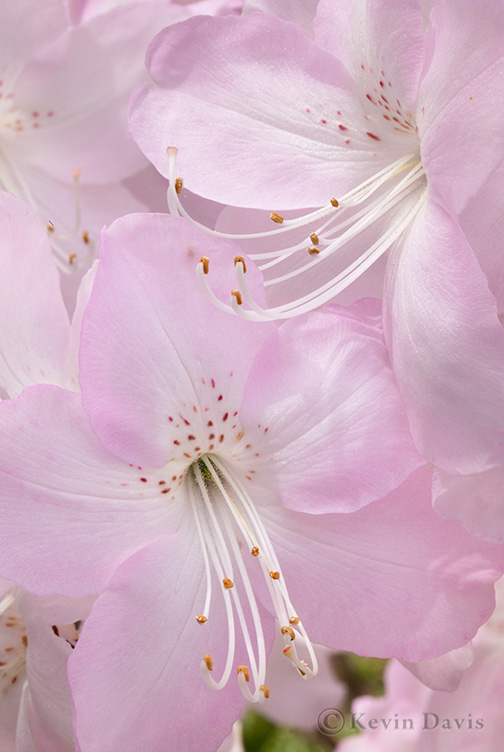
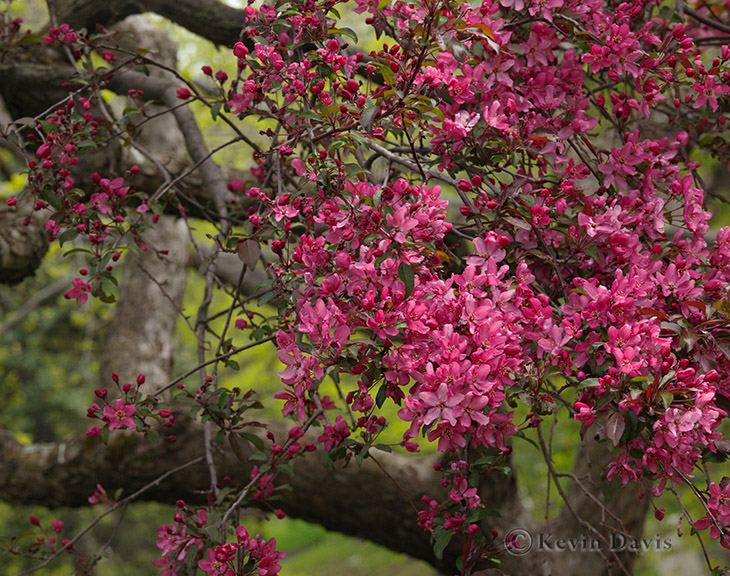
Today, I received another canvas print (from ArtisticPhotoCanvas.com) of an image from Mt.Auburn.  So, I am just sharing this image with you, along with another Mt.Auburn image, which I had printed earlier this year (also printed on canvas by APC).

   (To see a larger version, click on the image)


The most recent print is apparently an azalea shrub, though I do not know the exact species.  It is photgraphed with a Canon 100mm f\2.8L macro lens.  (My experience has been that this lens is superior to using a non-macro lens coupled with an extension tube)

The second is a crabapple tree, photographed with the Canon 70-200mm IS f\4.

Fir branch under ice


Hiking in the white mountains of NH on Dec.1, there was no snow at the trail head, but eventually became a foot deep. Having made such a mistake once before (several years ago), I kicked myself for doing it again.

It was a long cold day, but there were rewards. In particular there were a few little streams that crossed the trail with small waterfalls only a few inches in height. The spray of water caused some interesting ice formations, including the one shown here. The fir branch was covered in ice, but the mossy rock beneath it was not, presumably because the movement of the water was enough to prevent freezing.

In retrospect, the choice of aperature plays an important role in the success of this image. Both the extreme foreground and the extreme background are slightly out of focus. However, I wish I had framed the image a bit more to the left to avoid the ice touching the left edge of the frame.

Click on the image for a larger view.

Canon EOS 5D mk II, 70-200mm (@ 170), ISO 800, f/7.1, 1/200 sec

The Third Sheep

Often, I will plan to be at a certain place at sunrise in order to photograph with the warm sunrise light. However, on this particular day, the weather forecast called for cloudy and cold. So I did not leave my motel room until 7:30am and only then found that some sun was dodging through the cloud cover.
Looking at a map, I chose some back roads to explore. The first road followed a river, but I saw nothing that caught my photographic intentions. Then I drove off through some farmland and stumbled upon these sheep, grazing on a hillside covered with frost. Atop the hill, the sun was catching the orange leaves of autumn maple trees. At the bottom of the hill was a still pool catching reflections.
Just a bit of sunlight on the trees, combined with general cloud cover, the conditions were fleeting and did not last. I captured about a dozen images; this is one of my favorites.
Where is the third sheep? Uphill, further toward the trees, out of frame … but appears in the reflection.

Canon EOS 5D mkII; 70-200mm @ 200; ISO 800, 1/320, f/10

Water Lilly

Paddling the river this evening, I had planned on a quick trip; however, I stopped a half dozen times to photograph flowers (aquatic or nearly so). The day was waning and yet another stop may mean I would finish my trip in the dark. But each time I stowed the compact camera safely in my dry bag, I soon found another reason to dig it out of the bag yet again. This continued until the battery expired.

Trillium

Here is a very different type of image from Katahdin / Baxter State Park.
 
 
Both painted trillium and purple trillium are common in the northeast forests and both have a very small window of time during which they bloom, maybe three weeks. Purple trillium are more difficult to photograph because the flowers have a nodding presentation (the flowers droop over and face the ground).
 
 
What always catches my eye is groups of these flowers. Typically they are solitary plants, so a cluster of them is a nice find. For this shot, I used a wide-angle zoom lens with an extension tube. Without the extension tube, focusing distance is perhaps 14 inches. With the extension tube, I can get much closer to the flower, reducing the distance about 50%.
Canon 5D mk II, ISO 400, f/14, 1/6 sec (on a tripod of course)
.

Katahdin

While Mt. Washington (New Hampshire) is the highest peak east of the Mississippi, the terrain of Mt. Katahdin (Maine) is clearly the most challenging “hiking” that I have ever seen (excluding technical “rock climbing”). Before hiking up to the Knife Edge via the Dudley Trail, I thought perhaps carrying a tripod might be a hinderance, so I left it at camp. In retrospect, this was a prudent choice; the Dudley is more rock climbing than hiking. I am not typically afraid of heights, but this trail gave me the creeps!

Atop the Dudley Trail is the infamous Knife Edge between Pamola Peak and Baxter Peak. Having now personally traversed the Knife Edge, I must tell you that words cannot do it justice. It is the most dramatic landscape I have ever seen in the northeast USA; beyond that, I am at a loss for words.


It is widely reported that Mt. Washington is home of the world’s worst weather. Truthfully, many mountains have the same weather; they just don’t have an observatory at the summit to record the facts. At Katahdin, when the weather turned bad, I left and went home.
.